
Tag: Values

  • Promoted to Manager? Here’s How to Earn Respect Without Losing Friends

    Promoted to Manager? Here’s How to Earn Respect Without Losing Friends

    Becoming a leader is exciting but comes with challenges. You must build trust, earn respect, and set clear expectations. If you were promoted internally, shifting from peer to manager can be tricky. You’re no longer just a friend—you’re the one making tough calls.

    Build Trust with Your Team and Stakeholders

    Trust is the foundation of strong leadership. People follow leaders they believe in. Here’s how to build that trust:

    • Be honest and transparent about your goals and decisions.
    • Listen more than you speak. Understand your team’s concerns.
    • Follow through on commitments. Reliability builds credibility.
    • Encourage open communication and feedback.

    Research shows leaders prioritising trust see stronger team performance and engagement (Brower et al., 2000).

    Managing Internal Promotions: Shift Perceptions

    If you’ve been promoted within your company, your relationships will change. Some colleagues may struggle with seeing you as a leader. Others may expect special treatment.

    Here’s how to handle it:

    • Define boundaries early. Be clear about your new role.
    • Treat everyone fairly. Avoid favouritism.
    • Communicate openly. Address any concerns head-on.
    • Seek guidance from mentors or leadership groups.

    The First 90 Days by Michael Watkins stresses the importance of setting expectations from day one. Taking control early prevents misunderstandings and resentment.

    Leadership Can Feel Lonely—Here’s How to Cope

    Leadership isn’t just about managing others. It also means making tough decisions that not everyone will like. This can feel isolating.

    • Find a mentor who has been in your shoes.
    • Build a support network outside of work.
    • Set aside time for self-reflection and growth.

    Heifetz and Linsky, in Leadership on the Line, advise stepping back to see the bigger picture. This helps leaders manage stress and avoid burnout.

    Balance Relationships with Accountability

    Strong leaders know how to support their teams while holding them accountable.

    • Set clear expectations from the start.
    • Give feedback regularly—both positive and constructive.
    • Lead by example. Show the work ethic you expect from others.
    • Recognize achievements. People work harder when they feel valued.

    Kouzes and Posner in The Leadership Challenge emphasize that credibility comes from consistency. Your team watches what you do more than what you say.

    Practical Takeaways

    • Communicate clearly and often.
    • Build trust through consistency.
    • Establish professional boundaries.
    • Seek mentorship and leadership networks.
    • Balance approachability with authority.

    Effective leadership isn’t about being liked—it’s about being respected. Set the tone early, stay true to your values, and lead with integrity.

    Journeying:

    Articles and Reading:

    Article: Leadership Transitions and the First 90 Days

    Forbes Article: Why It’s Hard To Transition From Doing To Leading

    McKinnsey Article: New leadership for a new era of thriving organizations

    Article: Leadership Transitions: The Key To Organisational Success

    Article: Developing leaders by supporting their transitions into senior positions

    Videos:

    Simon Sinek on Building Trust

    It’s Lonely At the Top: Turn Loneliness into Leadership That Matters

    Short and Snappy Video on Building Trust

    References

    • Image Credit: PixelPop
    • Bass, B. M., & Riggio, R. E. (2006). Transformational Leadership. Psychology Press.
    • Brower, H. H., Schoorman, F. D., & Tan, H. H. (2000). A model of relational leadership: The integration of trust and leader-member exchange. The Leadership Quarterly, 11(2), 227-250.
    • Dirks, K. T., & Ferrin, D. L. (2002). Trust in leadership: Meta-analytic findings and implications for research and practice. Journal of Applied Psychology, 87(4), 611.
    • Gabarro, J. J. (1987). The Dynamics of Taking Charge. Harvard Business School Press.
    • Heifetz, R. A., & Linsky, M. (2002). Leadership on the Line: Staying Alive Through the Dangers of Leading. Harvard Business Review Press.
    • Kouzes, J. M., & Posner, B. Z. (2017). The Leadership Challenge: How to Make Extraordinary Things Happen in Organizations. John Wiley & Sons.
    • Northouse, P. G. (2021). Leadership: Theory and Practice. Sage Publications.
    • Senge, P. M. (2006). The Fifth Discipline: The Art & Practice of the Learning Organization. Crown Publishing.
    • Watkins, M. (2013). The First 90 Days: Critical Success Strategies for New Leaders at All Levels. Harvard Business Review Press.


  • School Life: Put the Policy in The Drawer, Set Expectations & Develop Relationships

    School Life: Put the Policy in The Drawer, Set Expectations & Develop Relationships

    We have all faced our own personal and professional challenges over the last two years. Whether it be maintaining a healthy routine, managing the nuances of online learning or coping with living and teaching in isolation- we have all needed to adapt and demonstrate some form of resilience and empathy. 

    Since the COVID-19 pandemic began, schools have been faced with a need to reassess how they promote, assess and maintain the well-being of their community. Each school’s individual contexts will have shaped how this has played out. There has been a renewed focus on mental health, student attendance, Social and Emotional Learning and nurturing parent-school connections. 

    Making connections from afar is harder- no doubt about it. Even our friends and family call less often the longer you are away from home. It gets increasingly harder to show up when things are not going well. It is not surprising then, that student attendance during periods of Distance Learning becomes sporadic. Teenagers are tasked with self-managing their sleep, diet and school work alongside the temptations that come with working from home. Teachers have become well-trained in spotting an online gamer or irrelevant group chat when looking at their screens.

    These less productive behaviours are often reported to me as the Assistant Principal. Like most schools, we have clear policies on attendance, gaming and cyber-bullying. But like most schools, we created these policies long before the onset of the COVID pandemic. Needless to say, taking these policies at face value and upholding the previous standard in light of our current situation may not always be the way to go. Online learning is as difficult for our students as it is for our teachers. Whilst we have adapted schedules and assessment expectations to ease the burden on all stakeholders, it has become clear that we often expect the same level of engagement and behaviour as we do when teaching face-to-face. I have recently, been asking myself, whether this is a fair or reasonable expectation. 

    Last month I had a conversation with a Grade 11 student who had been flagged for a surge in non-attendance. Looking at the numbers it was clear, that she is running the risk of missing too much class time to cover the content needed to be successful. The student has been living alone for the last two months as her parents were quarantined in another city. Period 1 was often forfeited in favour of sleep and gradually more and more classes were missed. The absence and missed work snowballed, and knowing she was struggling, she gave up. 

    These conversations with her were invaluable in being able to support her, and understand her context. The policy was less useful. There is no empathy within the pages of an attendance policy. We discussed both her situation and the need for a written policy. But really, we just focussed on expectations and developing relationships. She was not meeting the expectations that she had placed on herself and this was causing her a lot of stress. Knowing the potential consequences of her actions but not knowing how to claw her way back to success was becoming too much. I placed the policy in the metaphorical drawer and tried to understand her situation. I now meet with her every week.

    Sometimes the best action to take is just to be present and listen

    Lee Parker

    This type of conversation has become more commonplace and more important as the COVID restrictions continue. Yet, they are also one of my biggest challenges. Managing to successfully schedule meetings with an online schedule is difficult enough. Maintaining school expectations under crisis conditions is a challenge again. When working online we are often presented with the data before we gain clarity around the context. The data is often available to teachers who are like me, unaware, at the time of the weight that a student may be carrying. And yet, action is expected. Sometimes the best action to take is just to be present and listen. These continue to be challenging times, self-care and caring for others are more important than ever. I would argue that we are learning more about ourselves than ever right now and that these, are just maybe, the most important lessons of all.

    Journeying

    Image: Stock: Cyano66

    Forbes Article: Policies vs. Guidelines: How to Set Expectations

    PBIS Rewards: Rules vs. Expectations

    YouTube: Simon Sinek: The Infinite Game


    Education Week: Is the Assistant Principal the Most Overlooked, Undervalued Person at School?

  • To Rediscover Your Purpose: Chop Wood, Carry Water

    To Rediscover Your Purpose: Chop Wood, Carry Water

    Learning is all about making connections. Connections with, and between students, between classroom learning and real-life, and between our passions and our experiences (jisedu.or.id). It is inevitable after two weeks of lockdown and 6 weeks into Distance Learning, that we may feel some of these connections are starting to break down. It can be difficult to remain positive when the only constant connection in your life is with your internet.

    For educators, Distance Learning seems to attack our very purpose- to develop relationships with students and inspire them to take control of their learning. Without the physical presence of a teacher, or other students to collaborate with, many students find themselves floundering. 

    From our homes, we feel helpless in supporting them, and can only watch the product of months of work and effort seemingly dissipate. It is often the children most in need of strong connections that regress when faced with working online, without the much-needed love and support of their teacher to hand. It is the struggles of these students that we find most difficult to accept.

    When working online, we often fail to experience the joys of seeing a student struggle through a problem to achieve the correct answer,  to laugh at an impromptu joke, or to be amazed at an original idea. Quite often, no matter how innovative a teacher’s approach may be, teaching and learning can become rather passive and didactic online. Without experiencing these moments of joy and celebration, the job itself can seem rather pointless, and we begin to question our own direction. 

    It is important to remember at times like these that our purpose remains the same. It is only the path that leads us there that has changed. Our students still know that we care, and they share the very same frustrations that we do. They want to be back in the classroom as much as their teacher. After all, school is fun. So, when we are feeling lost or disconnected from our purpose it is important to throw ourselves into the process. The work. The rewards will come later. Ryan Holiday writes:

    “Every time you sit down to work, remind yourself: I am delaying gratification by doing this. I am passing the marshmallow test.”

    Ryan Holiday

    This thinking reminds me of an old Zen proverb that my friend used to carry as his mantra. “Chop wood, carry water.” In other words, just do the work, no matter how tough it gets, how little reward or acknowledgement you feel,  just do the work.  If you stay in the present and focus on the process, you will learn a lot, and hopefully, emerge stronger for it. 

    As teachers, we are responsible for leading and guiding our students. This goes without saying. Many of us do this without thinking, at the expense of leading ourselves. During times of upheaval, leading ourselves can sometimes take a back seat, whilst we aim to stay in the race and get the job done. It is important that as we navigate the challenging circumstances brought to us by the pandemic, we do not lose sight of our ‘True North’. Reminding ourselves of our purpose can help the trying times seem less trying and look towards the rewards of the future. 

    “The hardest person you will ever have to lead is yourself.”

    Bill George

    These last two weeks in China have been amongst the most challenging of my career. Emotionally, physically and spiritually. I have had days of sheer frustration and days when I have felt helpless. On Thursday morning, I left a meeting so frustrated I called a friend and vented. I felt better, albeit briefly. Venting, however, solved nothing. Instead, I felt guilty for placing my frustrations on someone else’s shoulders. When a situation is out of your control venting does not help. Focussing on doing good work, however, does. When I look over the events of the last week there a definitely a few bright spots in the work, that reminded me of why we have chosen to do the work we do. 

    On Monday, the Senior Leadership Team informed teachers of some amendments in assessment policy that would be implemented in light of our online situation. A reduction in Assessment of Learning and a renewed focus on Assessment as Learning. With the pressures of formal assessment removed, we can be free to take risks as teachers and encourage students to channel their energies into their curiosities and passions. A small step, adding an element of fun to the online experience and a focus on teaching skills and character.

    On Thursday, a Grade 6 student sent an email to the leadership team. Her parent had tasked her with finding herself a new school in Australia and she was seeking some support. An 11-year old girl faced the challenge of doing this alone. My heart went out to her. She was asking for advice, and at that moment, I was reminded again, that these kids need us. We may not be physically present and yet, they turn to us. The same day, I saw “A Letter from That Kid”. This is an open letter from a student to their teacher posted on social media. The letter reminds us that we do not know the challenges our students may be facing at home, and whilst we may be experiencing frustration, remember that they are too.

    On Friday, we worked in Teacher Evaluation groups as part of our CIS accreditation process. My group was focused on Domain A: The Purpose and Direction of the school. I had prepared the Zoom session as best I could, and of course, things did not go as planned. Links would not work and many of us were called for COVID testing mid-session. The session, however, generated some rich discussion around the school’s guiding statements and it was clear that as a community we are indeed moving in the right direction despite the chaos that we find ourselves in. Much work to do, much to be proud of.

    “Resilience and humility go together. If you are grounded in your organization’s purpose, it gives you the energy to navigate the storms. Humility also helps you to recognize that you don’t know everything, so in moments of crisis you reach out for help; you learn.”

    Carolyn Dewar

    Friday afternoon did also present itself to be one of the most emotionally taxing moments of the week. The school held a town hall meeting to discuss the current difficulties facing those who wish to fly home for the summer. Many have not seen their family since before all this began, and wish to return home for the first time in three years. Flights, however, are currently only one-way and are extremely expensive, re-entering China is also problematic. The dilemma is real. Fly home and see family, potentially being trapped outside the country and forfeiting your job, or remain here for one more year and continue to work in whatever form it happens to be when August rolls around. The conversations were honest and heartfelt, with everyone present understanding and respecting the challenges we are facing at this time. Whilst not everyone will have left the meeting happy, I was reminded of the strength of our community, and that our core value, empathy, may just be the most important value that we possess at this time.

    Journeying:

    Image: Stockninja at iStock.com

    A Letter to Teachers From That Kid

    Empathy Is The Most Important Leadership Skill According To Research: Forbes.com

    Empathy Rules: Harvard Business Review

    Leadership Lessons From The World’s Best CEOs: Mckinsey.com

  • Leading Yourself: 5 Leadership Lessons From The Stoics – Part 1

    Leading Yourself: 5 Leadership Lessons From The Stoics – Part 1

    Over the years, I have attended and completed many leadership training programs. Some good, some not so good. “Good”, however, is subjective. To me, “good’ is when I have learned a lot, I am energised by the experience and I am able to use the ideas right away. “Good” has never been about the certificate gained, or the status of the awarding institution.

    “Good” has involved collaborating with and learning from other experienced educators. Often these people are a lot more experienced than me and I am intrigued by their accounts of leading their school and moving it forward.

    Formal Education: Leadership Training Programs

    My Master’s Degree was good. I enrolled with Endicott College, in Beverly, Massachusetts. The course covered many topics from the world of leadership and they were all set within the context of International Education. The Professors are all experienced School Leaders who were able to share both leadership theory and their personal experience. These courses were fun and useful. They are designed to be practical rather than overly academic. This served me well and provided a solid foundation upon which to build my leadership journey.

    My Certificate in International School Leadership from The Principal Training Center was good. In fact, it was excellent. A series of interactive workshops again, led by seasoned School Leaders provided me with an excellent professional network as a reward for my efforts. I am still in contact with many leaders from this experience today.

    Most recently, due to COVID-19, I pursued leadership development online. The Harvard Graduate School of Education was recommended to me, and I enrolled upon The Certificate of School Management and Leadership. This was also, good. There was a network of eager and experienced professionals ready to discuss hot topics from the world of education. The course contains real-life case studies and research from Harvard University and required you to reflect upon your current practice at every turn. 

    Informal Education: Reading To Lead

    As is the case with most educators, I am a learner and a reader. It is not surprising then that many of my most personal leadership lessons came from books. I have other posts on lessons learned from specific titles and so I will not review these here. I would like to focus on the leadership lessons that I have learned from The Stoics. 

    I stumbled across Stoic Philosophy after discovering Ryan Holiday online. Intrigued by this approach to life I journeyed and began reading the books that Ryan considers the core Stoic texts.

    The Core Stoic Texts:

    • Meditations by Marcus Aurelius
    • Letters from a Stoic by Seneca
    • Discourses and Selected Writings by Epictetus 

    Since then, I have read their other works and regularly review these books for their guidance and wisdom. When times are challenging and the going gets tough, these books keep me grounded and focused on what is important. I have also learned that Barrack Obama and Abraham Lincoln also kept copies of Meditations to hand for inspiration.

    Ryan Holiday’s own work also provides guidance in a much more accessible format. Ryan’s book ‘Ego Is The Enemy’ is where I began my Stoic journey and one of my personal favourites. All of his books are both entertaining and insightful in their own way.

    Ryan Holiday’s Stoic Series:

    • The Obstacle Is The Way
    • Ego Is The Enemy
    • Stillness Is The Key
    • Courage Is Calling

    I recommend Ego Is The Enemy as a starting point for a few reasons. The main one is that as experienced educators we can often feel that we are entitled to the next promotion. Ryan reminds us that all achievements including promotion are earned through hard work. 

    This brings us to the first lesson…

    Lesson 1: Study

    “Leisure without study is death- a tomb for the living person.”

    Seneca. Moral Letters, 82.4

    The most inspirational and effective school leaders I have worked with, or have the pleasure to know, are both readers and learners. They did not stop trying to hone their craft upon recognition of a title. If anything, the study just got harder and more important. As a leader, it is essential that your knowledge of education and schooling remains current, that you are reading around leadership and that you are attending professional development. The process of learning in leadership is invaluable. You can never know everything. You can always improve. 

    A daily reading and reflection practice has proven critical to my leadership development as well as encouraging me to reflect upon my day and consider what I may have done better. Reading may not be leading, however, the knowledge gained from reading the work of experienced leaders has allowed me to apply strategies to my very own specific situation. In many ways, the book chooses you as we are drawn to content most relevant to our current situation. The lessons you take from it will depend on how open you are to learning and improving.

    Lesson 2: It Isn’t About You

    “That which isn’t good for the hive, isn’t good for the bee.”

    Marcus Aurelius. Meditations, 6.54

    Many leaders enter a new role with their own personal agenda. It pays to remember that your agenda is doing what is best for learning within the context of your current school. If all actions benefit the school community then it is of benefit to you.

    Implementing a new initiative because it worked well at your previous school may look good on your CV, however, it will not necessarily benefit the school. Consider how will it survive long after you are gone. Put your students, teachers and parents first and you will be leading well. If necessary nominate a critical friend to confide in and keep you in check.

    Lesson 3: Not Everyone Will Like or Agree With You, And That’s OK!

    “The Universe is change. Life is opinion.”

    Marcus Aurelius. Meditations, 4.3.4b

    As a leader, you will be required to do things that people may not like for the good of the school. Not everyone is privileged with possessing the big picture, and so you inevitably run into opposition or become the subject of gossip and rumour. This is OK. As long as you remain true to working in the best interests of the school, let them talk. 

    Lesson 4: Things Won’t Always Go As Planned

    “Don’t seek for everything to happen as you wish it would, but rather wish that everything happens as it actually will- then your life will be serene. 

    Epictetus. Enchiridion, 8

    This lesson has never been more relevant to me than it is now. The best-laid plans often go wrong and we are often judged by how we respond to these shifts in fortune. Keep a level head and focus on the bigger picture. The road twists and turns but you will get there in the end.

    As a first-year leader, you will often make mistakes. This does not matter. Owning them and responding in the best interests of your students and teachers is what counts. In a culture of psychological safety, you will be free to take risks and learn from them. If a culture of psychological safety does not already exist, then it is part of your duty as a leader to help build it.

    Lesson 5: Set The Standards And Use Them

    “When the standards have been set, things are tested and weighed. And the work of philosophy is just this, to examine and uphold the standards, but the work of a truly good person is in using those standards when they know them.”

    Epictetus. Discourses, 2.11.223-25

    As a new leader, you will be tried and tested. Set the standard for yourself and others. A school with high standards will experience better behaviour, gain better grades and have a happier community. When everyone is aware of the expectation and how to meet them you can rely less on policy. Referring to policy can sometimes seem very punitive, but adhering to high standards relies more on character. Having a clear policy is essential, however, only use it when you really need to.

    There are many lessons within every page of the Stoic texts. Reading selected writings daily and reflecting on my practice as a leader has taught me more about myself than any formal leadership training. I highly recommend this daily meditation as one approach to improving your own leadership practice.

    Journeying

    Ryan Holiday’s Website

    Lives Of The Stoics by Ryan Holiday

    How To Be A Better Leader by Plutarch

    How To Think Like A Roman Emperor by Donald J. Robertson

  • The Assistant Principal Interview: 5 Common Questions Asked During The Assistant Principal Interview

    The Assistant Principal Interview: 5 Common Questions Asked During The Assistant Principal Interview

    One of the most common questions I receive from teachers wishing to enter leadership is “How do I prepare for an Assistant Principal interview?” The easy answer is, by applying for jobs and going through the process. You will build a bank of questions and ultimately, gain employment in the role that you are most suited for at that point in time. 

    Here are five questions that I have been asked, or have asked myself during recent interviews:

    1. Please take us through your CV, highlighting any important highlights in your career?

    The interviewer is looking for any gaps in your CV as well as the parts of your experience that you hold most valuable. This may indicate what you may give the most time to, and what is important to you. It will also indicate whether you are a good match for working alongside the current principal. Your strengths should complement their weaknesses. This is why in many cases you may not get a job because your interests or skill set are too similar to that of the existing principal. “Fit” in this case is the determining factor.

    1. What are you looking for in your next position?

    This question targets areas such as your passions, interests and your previous position. Focus on your interests and your areas of growth. Refrain from highlighting what you were not able or allowed to do in your previous position. Always discuss your previous position in a positive light.

    1. What gaps if any do you think you will leave in your current school? Should you be successful, what will your current school miss about you?

    The answer to this question is not EVERYTHING. Everybody is and should be replaceable. You should, also want to be replaceable. If a school is to grow then it will need new blood and fresh ideas. Focus on your succession planning, and imply that there will be a seamless transition as you have ensured all documentation and systems are in place. Focus on personal traits, such as a sense of humour rather than your indispensable skill-set when navigating this question.

    1. What has been your favourite or most beneficial professional development experience of the last five years?

    Again, this question targets your passions and interests as well as your learning style. Your learning style may be an indication of how you would lead in-house professional learning and so ensure that you explain why the process of learning was enjoyable and of benefit to you.

    1. The classic: In three words, how would your current colleagues describe you?

    This is an obvious question. Remember to be honest and to be humble. You do not want to enter a role for which you are not suited. 

    An interview process is also a selection tool for you. If the position does not feel right, if the school does not seem like a good fit or you do not like the vibe of the current principal, then walk away. There will be other jobs and other interviews. Record the questions and learn from them.

    A Note On Asking Questions

    I recently conducted an interview with a candidate for a teaching position. The candidate was currently in a leadership position. It was clear during the process that he wished to remain in leadership and hoped to secure a teaching position and then move into leadership again in the future. As a result, his answers, and the questions he asked were focused on a position that we did not have available.  

    Strictly speaking then, he was not answering our questions correctly. It also gave an indication that he may experience frustration at returning to the classroom. In the short term, this would not be an issue, but over time, a frustrated colleague can become toxic and can destroy a school’s climate and culture. 

    It is important that you apply for both the position and the school for how they fit your aspirations and skill-set at that point in time. Do not approach a school with the expectation of being promoted from within down the line. Those initial years may become very stressful and if the promotion does not come, you may be left feeling very resentful. Interviewers will be able to read a situation like this easily. In short, if you are entering the interview process, be sure that it is for a position that you want to enter immediately.

    Photo by Tim Gouw on Unsplash

  • Leading Yourself: How COVID Lockdown Is Causing Us To Live Our School Values

    Leading Yourself: How COVID Lockdown Is Causing Us To Live Our School Values

    Last week, on Sunday 27th February, Shenzhen announced that they would be locking down areas of the city in order to prevent the spread of the Omicron COVID virus. I, like many of our school community, live in one of these areas and the thought of being quarantined, albeit at home, was not appealing. Whilst many countries have moved past these measures, in China, it is still very real.

    You download the short video to see the testers marching through the streets.

    We had heard of the lockdowns imposed in China. The duration is often extended without warning and the psychology of having the freedom to walk around freely weighs heavily on most people. Social Media plays a significant role in the spreading of rumour and fear but has also brought our local community together. Neighbours are talking online, sharing food when possible and offering much-needed support. 

    The same can be said of our school community. Teachers and students have shown great empathy and compassion towards each other and are ensuring that everybody feels connected and valued. Whether this has been teachers checking in with each other via WeChat or Wellness checks for students during lessons and Advisory, the effect is felt and appreciated.

    As an Assistant Principal, I have the privilege of seeing the big picture. I am in the meetings, I am able to drop into online lessons and communicate with parents. The stress we are under is real. The love we are displaying towards each other is real too.

    It occurred to me that at this time, each and every member of our community is forced to live by and consider, our school values of Respect, Perseverance, Creativity, Empathy, Integrity and Well-being. I have seen many examples throughout the week and appreciate the efforts people have made to continue life as ‘normal’.

    Relationships know no hierarchy, but they know kindness and connection-especially when things are hard.

    Dr. Jody Carrington

    Respect

    Respect has most frequently been expressed as patience. An understanding that we all interpret and respond to situations in different ways. Students may miss a deadline, but ‘was their WIFI not working or did they choose not to do it?’ How we respond as teachers to scenarios like this will impact the quality of our relationships with students in the future. Teachers know this and are working with care and sensitivity. Students are also understanding of the stresses faced by their teachers. Online lessons often take longer to prepare and require teachers to pivot and change the approach or medium by which they would deliver their lessons and assess students. Flipgrid, Kahoot, Quizlet are all being utilized readily along with many more innovative approaches to teaching.

    Perseverance

    We persevere because we must. As teachers, we know that students should not feel our burden and so we teach because that is what we do. I am reminded of Rita Pierson’s Ted Talk: Every Kid Needs a Champion. In times such as these, we do it for the kids, even if we do not much feel like it. Students persevere, but like us, they are tired. Preserving mental health has become more important than ever than delivering the curriculum. It always has been that way, but now we have a clear situation that we can all relate to that brings this message home.

    Creativity

    Engaging students, particularly, our younger students whilst online is increasingly difficult. Teachers are forced to flex their creative muscles to keep kids on board. Lessons are fun and kids are acknowledging this. On Thursday, I entered a Grade 6 English lesson. Students were randomly picked to give a 60 second Ted Talk focusing on the fun, crazy and positive aspects of their week. I was entered into the randomizer wheel and told my crazy tale of woe from Sunday morning. My shower door exploded whilst I was under the water. Glass flew down all around me and cut my arms and body. I was lucky it was not a lot worse. It was scary. Students were shocked, laughed, and appreciated an honest story from an adult at the school. This introduction was then sealed with a musical and fully enjoyable ‘Rick Roll’. Seeing all the students singing and dancing to Rick Astley made my day. Not only because they have a finer appreciation of cheesy music, but because it added some levity to the serious situation that we are all experiencing. The students know there is no end to this lockdown within sight, and so these moments of lift are valued more than ever. 

    Empathy

    As a school, we have been working hard on developing empathy in our students. This is particularly important when working online as our sense of empathy diminishes. Students are more likely to consciously or unconsciously engage in cyberbullying, and reminding them to think from another perspective is key to building a sense of community. As a Leadership Team, we have sent individual messages to every teacher and contacted students that may be at risk. It has been a time-consuming process but the rewards have been worth it.  We have been able to identify teachers and students in need and to support them accordingly. This is a simple human touch and goes a long way.

    “Empathy is certainly harder to muster when you’re typing onto a screen instead of looking into someone’s eyes.”

    ― Kaitlin Ugolik Phillips, The Future of Feeling: Building Empathy in a Tech-Obsessed World

    Integrity

    Being locked down and out of sight has encouraged the need to place trust in each other. There is always an outlier, but for the most part, students are working diligently and honestly. We recently held our IBDP mock exams online. When invigilating through a webcam, it would be easy to think each sideways glance was an attempt to read notes posted on the wall. We were forced to trust our students and our own judgement. A somewhat stressful yet successful experience. Another COVID first for all involved.

    Well-being

    By utilising and living according to our values we have been able to preserve and monitor the well-being of the community. During these times it will fluctuate, but, knowledge is power, and by knowing how people are feeling we are able to respond and help as much as we can from within our homes. Whether it be informal wellness check-ins via Zoom, Flipgrid Olympics, or direct Well-being lessons, ensuring all of those in our care are flourishing is at the forefront of our minds.

    It is in the minds of students too. One of our Grade 12 students asked if she could create a Padlet of positive messages to be placed on the Student Bulletin so that these can be read and shared during our Advisory periods. What a great idea! Another student has written an emotional account of her dealings with eating disorders and illustrated this with her own artwork. It is a powerful piece and goes live today in Wellbeing In International Schools Magazine. I encourage you to check it out.

    These examples of how we live our values are celebrated in our school assemblies in the form of recognition cards. Teachers and students can write cards and the recipient gets a public shout out. Highlighting these positive behaviours go a long way in reinforcing the fact that without our well-being and the support from each other, we really cannot learn. 

    Leading Yourself

    During Lockdown, my inbox has exploded and the tasks come in quicker than ever. It is easy to sit in front of a screen responding to the situation in front of you and not factor in any screen-free or relaxation time. I have made a point of reading, and in a time when teachers have felt a loss of purpose in their work I chose two books: Because Of a Teacher by George Couros and Leading with Purpose by Nick Craig. Both have been insightful, however, Because Of a Teacher is also a feel-good reminder of why we do what it is we do. The book is full of tales of teachers going the extra mile and making a difference. I highly recommend it. Reminding myself that now more than ever, our community needs its leaders healthy, caring and focused, keeps me on my game. I can put my frustrations aside and move onward. We are in it together.

    During the last week, I have been humbled by our community response to the lockdown and whilst I cannot wait to return to face to face learning and see our students again, I am curious as to what other marvels may occur in the coming weeks.

    Journeying

    Image by Glen Carrie on Unsplash

    Rita Pierson: Every Kid Needs a Champion

    Because of a Teacher by George Couros

    The Plague by Albert Camus

    The Future of Feeling: Building Empathy In a Tech-Obsessed World by Kaitlin Ugolik Phillips

    The Strengths Switch by Lea Waters

    Leading from Purpose by Nick Craig

    Onward: Cultivating Emotional Resilience in Educators by Elena Aguilar

  • Flourish: The Road To Developing Student Character

    Flourish: The Road To Developing Student Character

    In his thought-provoking book “Creating Cultures of Thinking”, Ron Ritchhart asks the question “What would you like the children you teach to be like as adults?” This simple question has a very deliberate purpose, to cause educators to reflect upon what they are teaching and in their role in shaping a student’s future. Typical answers to this question include creative, happy, resourceful, resilient, critical thinker and innovative. Teachers rarely say I’d like my students to be an A student or a 7. We forget the grades and focus on skill and character.

    In the wake of COVID-19, skill and character development have become buzz terms, more so than before. The need to explicitly teach children the so-called ‘soft’ skills is crystal clear. Schools are responding in part, by realigning or developing their Social and Emotional curriculum. Programs such as SEE learning and the Positive Education Enhanced Curriculum (PEEC) are being discussed regularly in school meetings, at interviews and online. Such programs aim to support our children in their ability to thrive, flourish and be better versions of themselves. A lofty goal indeed. 

    “One of the most common responses from groups is that in a culture of thinking, there is a sense of purpose to the learning.”

    Ron Ritchhart, Creating Cultures of Thinking: The 8 Forces We Must Master to Truly Transform Our Schools

    Encouraging students and teachers to see past the grades, however, is no easy task. Especially, when university placements are dependent on them. It is a mindset shift and taps into the individuals own educational philosophies. It also forces schools to examine their own cultures and priorities. This will undoubtedly involve revisiting their own mission, vision and values. Take a walk around your school, look at the walls, listen to what is being said. Are you prioritising grades or are you focusing on developing thinking and wellbeing? Are the students being challenged? Are they excited to learn? Are they developing new passions?

    “We don’t become better because we acquire new information. We become better because we acquire better loves. We don’t become what we know. Education is a process of love formation. When you go to a school, it should offer you new things to love.”

    David Brooks: The Road to Character

    A pet peeve of mine is the overuse of the word ‘summative’. During my career, I have heard students referring to their summative assessment with fear and reverence. Teachers often plan units with the end in mind, prioritising success on the final assignment over skill and character development.  Does success on the assignment reflect skill development? More often than not, the answer is yes. Is this growth in skill and character explicitly communicated to the student? Often the answer is no. This is an understandable omission, but how do we make the shift from a culture centred upon exam success to one committed to developing well-rounded and happy individuals?

    This year we have attempted to start the culture shift. We have introduced the Positive Education Enhanced Curriculum (PEEC) and incorporated their lessons into our advisory framework. Moving the focus of our energies to value and character development. It is a long road, but one we are willing to travel. We know it is the right thing to do for our students and so we persevere.

    As we tap into the world of Social and Emotional Learning and consider how best to implement the program; it stands to reason that we re-examine our values, our priorities and our way of doing things. This helps to form new goals and a new way of seeing things. How we measure the success of our advisory program is now being considered and we have had recent conversations with The Mastery Transcript Consortium, a non-profit organisation committed to providing an alternative method of measuring student success. One that focuses on skill and character development over passing the test. We are new to the conversation and I look forward to seeing where it will take us. Being able to clearly see the impact of our efforts will be rewarding and powerful and provide a great deal of motivation to both teacher and student.

    The importance of tapping into student passion and interest whilst providing them with ‘essential’ worldly knowledge has again made itself known. If a student is not interested or engaged they will not learn. Whether a school focuses on succeeding on a test or on skill development is irrelevant. The learning process must inspire and generate ideas and curiosity. The path to mastery requires that students want to learn, that they enter a flow state and lose themselves in the process. And so whilst, I lose myself in the research process, I hope that our teachers lose themselves in the process of planning and delivering life-worthy learning.

    Journeying

    Image:

    JOHN TOWNER on Unsplash

    Links:

    The Mastery Transcript Consortium

    The Global Citizen Diploma

    Ron Ritchhart.com

  • School Life: “These Kids..”

    School Life: “These Kids..”

    Every week, I am fortunate to enter dozens of classrooms and witness our teachers’ creativity and working genius. Teachers tap into their passions and strengths, designing engaging and curiosity-provoking lessons for our students. You can feel the buzz in the room when kids are genuinely engaged in the learning. There is an urgency to their sense of wonder, their need to find the answers. 

    These powerful moments do not happen by accident. Creating ‘wonderment’ takes effort. It is a desire to harness a child’s passion by discovering what matters to them, what they care about, and building the experience around their interests. Curating the learning around a students strengths and passion will encourage students to ask questions. Their own questions. Questions that matter to them, and that they will be hungry to find the answers to. 

    “The “occasionally remarkable” moments shouldn’t be left to chance! They should be planned for, invested in.”

    Chip and Dan Heath: The Power of Moments

    Such passion and curiosity are not ignited by teaching to the test. They are a product of “lifeworthy” learning experiences designed by the teacher. David Perkins, the author of Futurewise, challenges us to ask “What did you learn during your first twelve years of education that matters in your life today?”  A question that we would do well to ask ourselves before planning a series of lessons and assessments for our students. We rarely use the information taught in school, we do, however, utilize the skills and thinking. 

    Sustainability, climate change and inclusion are all important topics relevant to the future lives of our students. But do they care about them? They should. Why should they? Framing such topics around questions and activities that spark curiosity is essential for student engagement. As a teacher, a solid starting point for creating wonder is getting to know your students personally. Understanding what matters to them and the things they think about on a daily basis will help you connect to the children and create value-added relationships. Students always enjoy talking about their passions. 

    Chip Heath calls these moments of elevation, insight, pride and connection PEAK experiences. Peak experiences are easily identifiable. These are the lessons that have your students working in a state of flow and then entering the next lesson still debating the issues raised in the previous class. The “A-ha” and “Wow” moments. Shouldn’t we aim to make all lessons memorable and meaningful like this so that it is not only the extracurriculars and field trips that the children look back on with love?

    The recipe for creating lifeworthy peak experiences is fairly straightforward:

    • Care about your students personally and ensure that they know that you do
    • Tap into their passions and curiosities
    • Choose your topics and questions wisely. Why should they care?
    • Consider the life worthiness of the questions and tasks that you are asking them to engage with. If it is not relevant to them, why would they bother?
    • Consider the medium and product. Are the students using 21st-century skills? Are they using technology that will support them in their futures?
    • Create a safe environment for mistakes and innovation. Allow the students to share their ideas and questions. There are no stupid questions.
    • Base all learning around real-world experiences and problems.

    It is my belief that when these elements are in place, the environment is ripe for learning. Curiosity is respected and encouraged, even when it causes a deviation from the lesson plan. Allow curiosity and relevance to lead the way.

    Occasionally, I will witness a lesson that did not engage the students. The lesson most likely was not planned with lifeworthy PEAK experiences in mind and focused on teaching to the test. Asking students to read rubrics and fulfil IB criteria is equivalent to an adult reading a life insurance document. It is essential, but it is not fun. It will not be surprising then to notice a lack of engagement at these times. If the entire unit is centred on formal assessment rather than learning then we risk boring our students to death. Bored students can equal poor behaviour. 

    It is during these ‘teach to the test’ lessons that I have heard teachers use sentences that start with two dreaded words. “These kids..” “These kids just don’t want to work.” “These kids just aren’t interested.” “These kids..” 

    Such inhibiting beliefs are damaging to learning and to a child’s self-esteem. When we come to believe that a student is not capable of learning we act differently towards them, label them and adjust our methods of teaching and expectations accordingly. The result is under-achievement.  

    Research on self-fulfilling prophecy and stereotype threat supporting this claim is not hard to find. We would do well to be reminded that as teachers that when things do not go as planned that we should first look inward before blaming the student for not hitting the target. What could we do differently or deviate from? How has my behaviour impacted learning in this lesson? Our biases influence how and what we teach our students and ultimately their engagement and performance. 

    As teachers when we feel frustrated and start to utter the words, “These kids..”, we should take a deep breath and remember that:

    These kids are looking to be inspired

    These kids want to learn

    These kids will make, and learn from mistakes

    These kids have untapped potential

    These kids will be our future.

    Journeying

    Videos

    The Pygmalion Effect and the Power of Positive Expectations

    How Stereotypes Affect Your Test Scores

    The 6 Types of Working Genius

    Books

    Futurewise by David Perkins

    Whistling Vivaldi by Claude Steele

    Blindspots: Hidden Blindspots of Good People by Anthony Greenwald

  • School Life: Bright Spots and Blindspots

    School Life: Bright Spots and Blindspots

    As our teachers embark on their second year of the pandemic experience, it is hard for them not to get despondent. International travel is still limited, and those choosing to leave will face an arduous three-week quarantine upon their return. COVID restrictions are maintained that can result in impromptu COVID tests. The threat of online teaching is always looming.  International teachers have an added psychological pressure during our very clearly defined recruitment season. Early resignations are required and choices need to be made. Resign, possibly see family, move to a country without quarantine restrictions or continue living a fairly normal existence knowing that one of the main benefits of living abroad has been taken away. During these challenging and uncertain times, it can be beneficial to focus on the bright spots. 

    Every morning I aim to greet the students at the school gate. Elementary school students poised to run into campus ready for another exciting day of learning. Middle and High school students enter the school a little more casually as they contemplate their next assignment or wipe the sleep from their eyes. This is one of the highlights of my day. It is a chance to connect with students before the challenges of the day begin and never fails to energise.

    “This is a wonderful day I have never seen this one before.”

    Maya Angelou

    Walking around campus during breaktime affords me a similar experience. Students are on campus, having fun, teachers are discussing new strategies and exchanging ideas for their upcoming lessons and there is an energy that we are fortunate to experience by not teaching online. When a curveball comes my way, I savour those moments. After all, I could be at home attached to my laptop right now.

    Recently, we hosted an ACAMIS volleyball tournament and our 10th Anniversary celebrations. Musical and sporting performances were plentiful and gave our students time to shine and follow their passions. Both of these experiences allowed us to just sit back and watch the kids. What could be better? No grades, just fun. It is always exciting to see students outside of the classroom and experience them in a different light. This was no exception. There is always a student who surprises you with their level of talent. Usually, not just one. These days served as a great reminder as to why we do what we do. They are the bright spots.

    “Appreciation is a wonderful thing. It makes what is excellent in others belong to us as well.”

    Voltaire

    The COVID pandemic has, however, forced interaction with our community to be directed online. Our school is providing upwards of 50 parent workshops each month to ensure that the bonds and communication are upheld. It’s not the same and the lack of parent presence can be felt on campus. However, we receive a great deal of participation a sign that parents do indeed care about their child’s learning experience. Let’s not take it for granted.

    As an Assistant Principal, the challenge has been to find balance. Balance for everyone. To ensure that learning takes place, that the integrity of the programs are maintained whilst respecting the inevitable fatigue that comes from living in a state of flux. It has been very important to enter every interaction with a value-added mentality, asking “is this person better off from having this conversation?” Am I allowing my blindspots to drive the conversation?

    Equally important is presuming positive intent. All teachers have their students best interests at heart. This is important to remember when a lesson or an event does not go as planned. When carrying our own expectations and daily hassles,  it can be hard to eliminate our blindspots. The bias influences our perception and then, of course, our reaction. We do not know what the other person is going through. Homesickness, tiredness, illness, and stress. These are all present and influence the functioning of the school. Still, we continue to do what is best for learning. The kids feel it, and although they may not say it, they are thankful. 

    “Enjoy the little things, for one day you may look back and realize they were the big things.”

    Robert Brault

    So, at the end of a long week. I like to reflect on the bright spots and blind spots. What is going well, and what could I have handled better? This short meditation allows me to refocus and reminds me that despite all the challenges that have been presented to us, we still have one of the most important and rewarding jobs in the world. I challenge you to do the same. We have a lot to be grateful for.

    Journeying

    Videos:

    The Power of Gratitude- Oprah Winfrey Speech

    Actively Practice Gratitude- Brene Brown

    Ryan Holiday – On Journaling

  • The Assistant Principal Interview: Part 2 of 3

    The Assistant Principal Interview: Part 2 of 3

    One of the most popular questions facing candidates applying for Assistant Principal positions is “How would you enter the school as a new Assistant Principal?” This is often followed by, “as an internal candidate, managing and leading your friends and colleagues” or “ as a leader new to the school and community?”  The fact that this is such a common question implies that you should indeed have an entry plan. I should rephrase this. You should have an entry plan and stick to it. I had a plan and deviated, it slowed down my progress. I kept the fundamentals, however, I sacrificed some key aspects that I knew to be important. How did I justify this to myself? Time. There is never enough time… All the more reason to have a plan, right?! 

    So, what does an entry plan for an Assistant Principal look like? What are your priorities? You will need to consult your values and philosophy, the school strategic plan, the schools’ objectives for the year, and of course, the school principal. There are many books on the subject, all directing you to the key features of a successful transition. Some are more obvious than others, so let’s explore them and start to plan your First 90 Days. 

    The First 90 Days by Michael D. Watkins was first recommended to me as I was finishing up my Master’s Degree, by one of my professors. I have since learned more about this book and Watson’s work. It is a classic. I will refer to a lot of the underlying principles covered within the book whilst injecting some of my learning, applying it to the role of the Assistant Principal.

    Let’s get started.

    Be Prepared…To Tell Your Story

    Once you have accepted the role of Assistant Principal and signed the contract. You must celebrate. You should then dust yourself off, and get to work. There is a lot to do before you enter the building, or as was my case, Zoom into a Whole School Faculty Meeting. No matter how you are introduced to your faculty, the moment will define your future success, so make it count. It is likely you will be introduced to your Faculty already via a written biography,  it is, therefore, important to provide some extra information when meeting them for the first time. Your teachers will want to know how you will lead them, how you teach, and what you are like as a person. You must be vulnerable and open up to them, but not too much. Practice sharing your story during the interview. Be authentic. It will help you to discover whether if you are the right fit for the school.

    Creating Your Vision of Success

    Ensure that you have your definition of success as well as meeting the school goals. This will most likely consist of the points mentioned below. You should ensure that you build in some early wins, ideally, these will be highly visible to help build your credibility. You will often be asked about what your first 3-6 months will look like, so be prepared to tell the panel. More often than not, your first 90 days will involve building relationships and collecting data. Observing and learning about the school, not making any major changes. Nobody wants to hire a bulldozer.

    Build Relationships

    You cannot do this alone. Success is dependent upon relationships. How will you deliberately develop relationships so that everyone feels valued and included? Enter classrooms, meetings, assemblies and have corridor conversations. Care personally about your colleagues and students by getting to know them. Collaboration is a key value to discuss during your interview, however, acknowledge that as a leader you will sometimes need to act alone, and quickly.

    Earn Credibility and Trust

    Read the school policy and ensure you follow it. Communicate often. Be transparent. Keep confidence. As Kousez and Posner maintain, you should ‘Do What You Say You Will Do’. Nothing causes a loss of credibility more than a broken promise.

    Sharpen Your Saw

    Stephen R. Covey in his seminal work, The 7 Habits of Highly Effective People, discusses the importance of Sharpening Your Saw. As lifelong learners, this should be easy enough to speak to. You will need to keep learning on the job by reading around the latest research, and you will need to keep yourself healthy and energised by exercising, meditating and writing. Do not underestimate the demands of the job. Providing a clear understanding of the role and its demands will help the panel to see past a novice leader. Demonstrating balance and an ability to learn will support your application by acknowledging that life is not all about work. You should not expect teachers to be tied to their desks, however, we all need to keep learning to grow. As Abraham Maslow once said, “In any given moment, we have two choices: step forward into growth or step backwards into safety.”

    “In any given moment, we have two choices: step forward into growth or step backwards into safety.”

    Abraham Maslow

    Be a Multiplier

    As teacher’s, we take for granted that our job is to multiply talent. We help students learn by building on their strengths, providing timely and effective feedback and creating valuable learning opportunities to support this. We should be doing the same for our teachers. How much more effective would our schools be if all teachers knew and understood the demands of leadership? Liz Wiseman in her book Multipliers, argues that we should attract talent and multiply it by developing a culture with a common language, learned behaviours, shared values and a celebration of heroes and legends, your star-teachers. Create an enabling culture that prioritises the growth of teachers and students. Fulfilled teachers create challenged and happy students. Consider how you will support the professional development of your teachers and be able to talk to it within the school’s context. What will it look like?

    The suggestions above provide some key areas that may be discussed in interviews and will have very practical applications. Take the time to learn about your school and then to consider how you will enter as an Assistant Principal. Your first 90 days will have a profound impact on your level of success and your perceived ability as a leader.

    Journeying:

    Books:

    The 7 Habits of Highly Effective People: Powerful Lessons in Personal Change by Stephen R. Covey

    Multipliers: How The Best Leaders Make Everyone Smarter by Liz Wiseman

    The First 90 Days by Michael D. Watkins

    Master Your Next Move by Michael D. Watkins

    Credibility: How Leaders Gain and Lose It by James M. Kousez and Barry Z. Posner

    Videos: 

    The 7 Habits of Highly Effective People Book Summary

    The First 90 Days Book Summary

    The Speed of Trust Book Summary

  • On Becoming The Assistant Principal

    On Becoming The Assistant Principal

    What is the Assistant Principal, and what do they do?

    The answer to this question is very complex. This is because the answer depends on your school context and mission, your principal and your own philosophy. You must ensure that you have researched and considered all of them if you are to succeed in your role as the Assistant Principal.

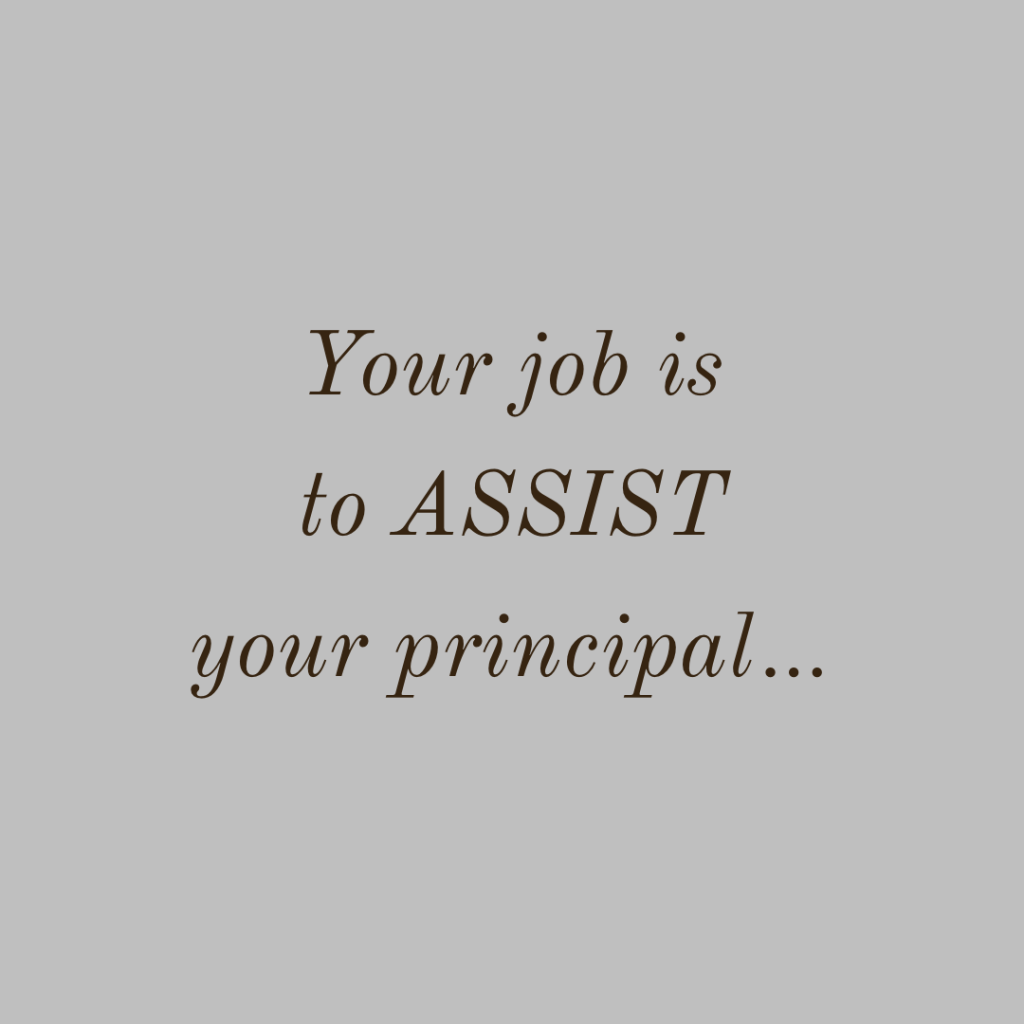
    As stated by Principal Kafele in The Assistant Principal 50, most professional development courses including an M.Ed in Education Administration prepare you to think and act as a principal, not, as an Assistant Principal. You can, therefore, enter your first Assistant Principal role, completely blind as to the expectations and demands of the job. You will do well to remember that your role is to ASSIST your principal in meeting their objectives for the school and not your own. If they align, so much the better. 

    To many, the Assistant Principal role is one that primarily focuses on technical skills such as building the schedule, writing policy, assigning duties and of course, managing student behaviour. It is, however, an adaptive leadership role, one that will force you to think on your feet and take the lead when your principal is not available. 

    Ensuring that you master and schedule the undertaking of the technical and predictable duties stated above is essential as this allows you to free yourself up to build relationships and drive learning forward in the classroom. An Assistant Principal is, therefore, also, by definition a pedagogical leader, a confidant, a crisis manager, a team player, a coach, and let’s not forget, a teacher. 

    It is, however, hard to provide a comprehensive definition of the role as it varies so much from school to school. When applying for the role, ensure that you read the job description thoroughly. This will give you clues as to what your principal expects from you, and allow you to prepare for the imposter syndrome that will undoubtedly be experienced on Day 1 of the job. 

    Things that may appear small may in fact influence the way that the position is viewed in the school. For example, is the role known as Vice, Assistant or Associate Principal? The latter may imply a closer relationship and one on more of an equal footing with the principal when it comes to decision making. This is an important distinction and will emphasize the type of relationship that you are expected to have with your principal.

    On Day 1 of starting my Assistant Principal position, I was asked to introduce myself to the faculty. I waxed lyrical on education, global citizenship and leadership. I quickly noticed the faces of the leadership team and some giggles from teachers. I cut it short, and joked, “Too much?” Yes, I had overdone it. I am not the principal.

    After that I focused my efforts on doing two things:

    1. Mastering the technical skills and tasks of the role.
    2. Developing relationships with the community.

    Mastering The Technical Skills

    Read the policy. Understand the systems and their context. Become familiar with the technology. These influence the daily life of teachers, students and parents and you will be expected to follow and use them wisely. Everyone will look to you for answers, and you need to be able to provide them quickly. 

    Developing Relationships

    Be visible. Greet the students and teachers in the morning. Walk the corridors. Enter lessons. Attend sports games and concerts. It will be appreciated and allow you to develop strong relationships with the community. Ask yourself this question: “Are people happier or better because of our interaction today?” If the answer is no, then you may need to rethink how you are connecting with your people.

    Closing Thoughts

    There are many things to consider when becoming an Assistant Principal. After you have read the job description and made the decision that the school, principal and philosophy are a good fit you must then consider what type of Assistant Principal you will be, and in turn, you will need to re-visit your educational philosophy and build your leadership philosophy. We will discuss these later. For now, consider your next move wisely. Why do you want the Assistant Principalship? Is this school right for you? Is this the right time? Only you have the answers.

    Journeying:

    Related Articles:

    The Assistant Principalship: The most misunderstood and Underutilized Position in Education- Principal Kafelewrites.com

    Related Videos:

    Starting The School Year As A New Assistant Principal: The New School Leader

    Your Job is to Assist…Principal Kafele- YouTube.com

    Why Good Leaders Make You feel safe: Simon Sinek

    What Do Assistant Principals ACTUALLY Do?-YouTube.com

    Hey School Leader, what is your identity?